




 UK Delivery Only £35
 ISO 9001 Quality
 Reliable Service
 Est. 1975
From rail and air travel to buildings, bridges and advanced engineering, steel underpins modern infrastructure. But behind every steel component lies a remarkable journey — from raw iron ore to a highly engineered material.
A Long History with Iron
Humans have used iron for over 5,000 years, initially from meteorites long before learning how to extract it from the earth. Iron ore is primarily iron oxide, and when it’s heated in a blast furnace with carbon, the carbon bonds with oxygen, leaving behind molten iron. This early product, known as pig iron, is the first step in steelmaking.
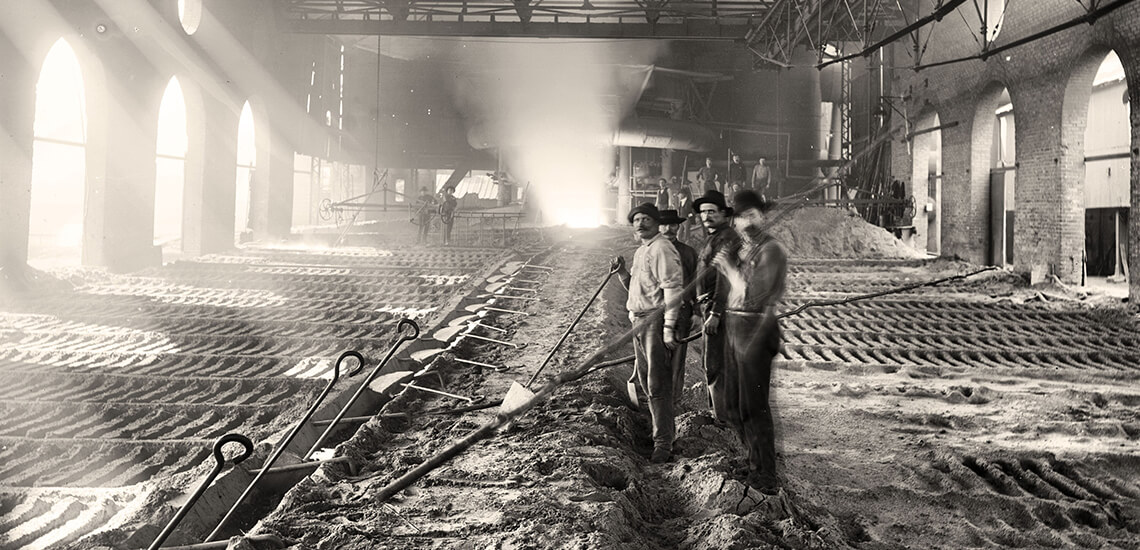
Workers casting pig iron inside the Iroquois Smelter in Chicago, taken sometime between 1890 and 1901: Detroit Publishing Co., publisher, Public domain, via Wikimedia Commons
From Pig Iron to Steel
Pig iron contains high levels of carbon and other impurities, making it brittle and unsuitable for most uses. Early steelmakers refined it using open-hearth furnaces, where limestone helped remove unwanted elements, forming a floating layer called slag. Once regarded as waste, slag is now widely reused in construction and infrastructure.
As carbon levels were reduced, the metal became steel — stronger, more versatile, and far more useful.
Steel may be everywhere, but its story is anything but ordinary.
Faster, Smarter Steelmaking
In the 1850s, the Bessemer process transformed steel production by blowing air through molten iron, burning away impurities while generating enough heat to keep the metal molten. This breakthrough dramatically reduced costs and helped power the Industrial Revolution.
Today, steel is mainly produced using the Basic Oxygen Furnace (BOF). By using purified oxygen and carefully controlled reactions, steel can be produced quickly and precisely. Additional elements can be added to create specialist grades for specific applications, from construction to aerospace.
A Material Still Evolving
While modern steelmaking is highly efficient, the journey from iron ore to high-performance steel remains complex and fascinating. It’s a process that continues to evolve through innovation, quality and sustainability — values at the heart of everything we do at West Yorkshire Steel.
Artists’ Corner
The Wealth of England: The Bessemer Process of Making Steel – an 1895 oil painting by the British artist William Holt Yates Titcomb.
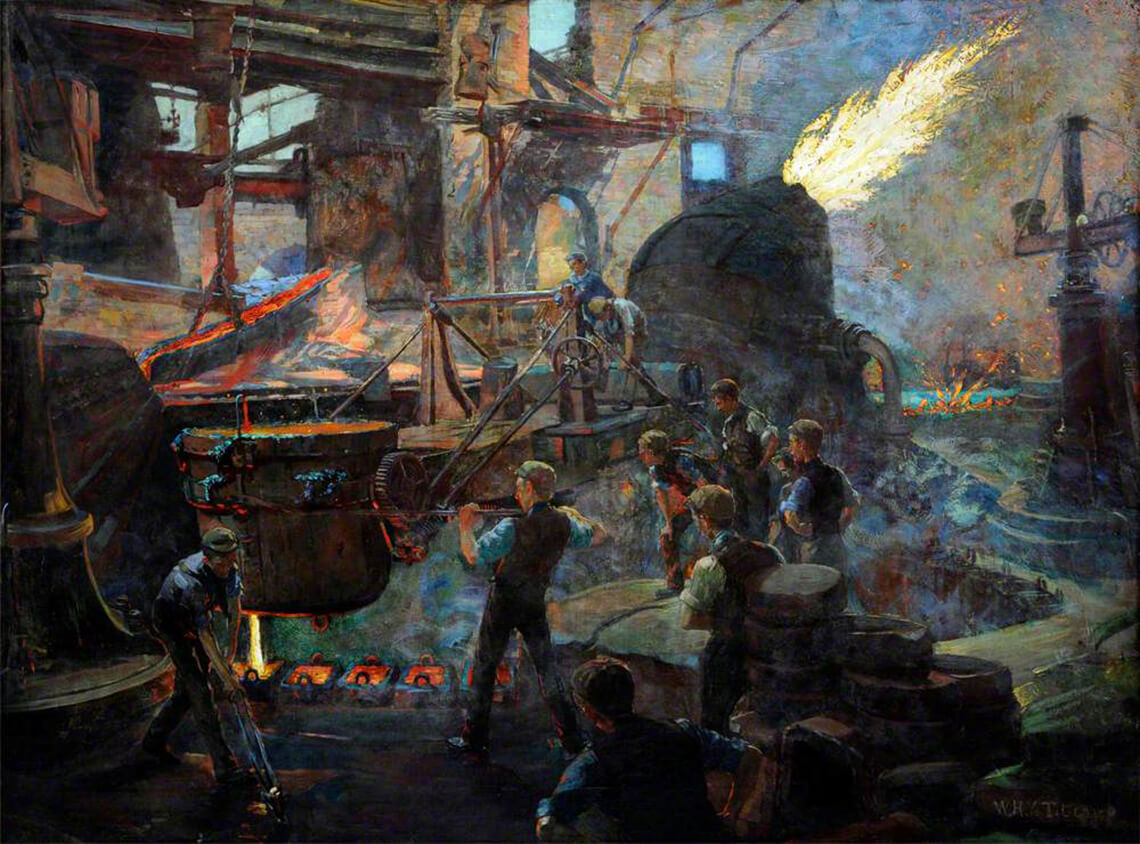
Image: William Holt Yates Titcomb, Public domain, via Wikimedia Commons